
2026-10-09
Why Meltblown Nonwoven Fabric Quality Matters in Medical Products
Meltblown nonwoven fabric plays a critical role in the filtration performance of medical face masks and other filtration-based medical products. However, two materials that look nearly identical may perform very differently during testing.
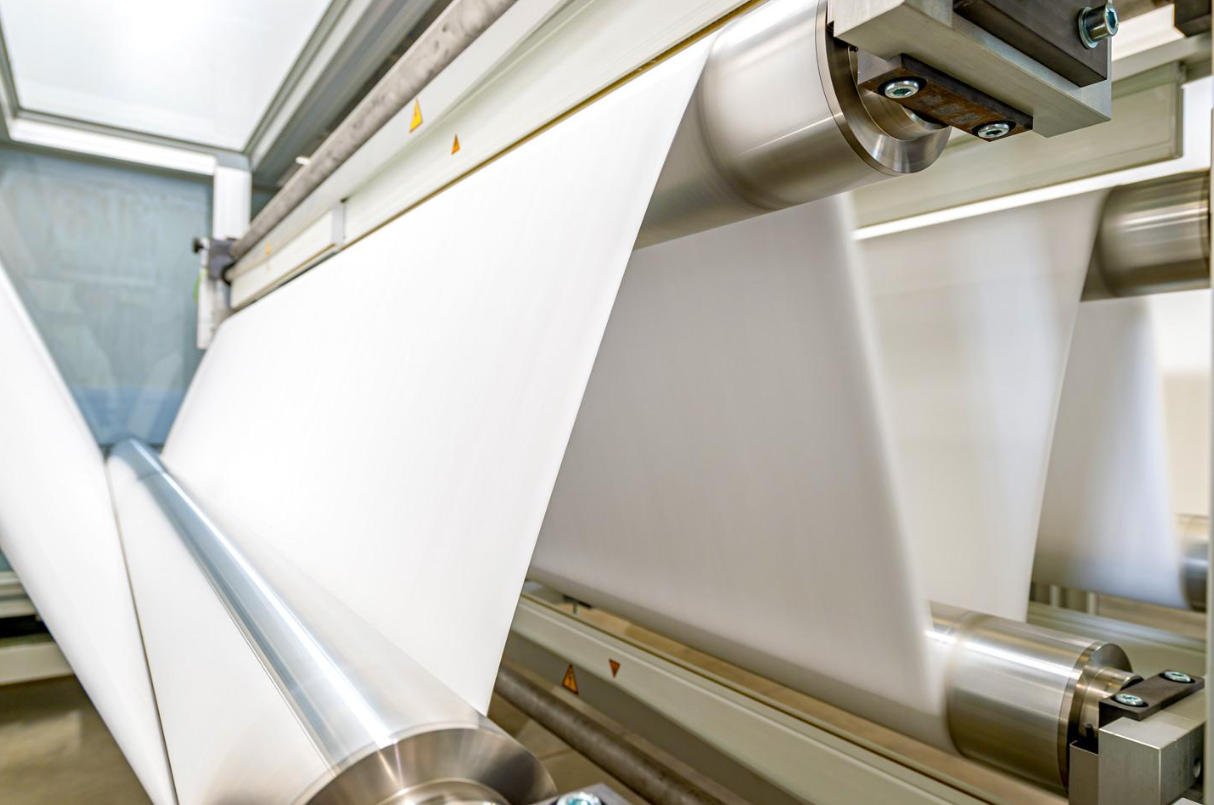
For medical product manufacturers and procurement teams, meltblown fabric quality is not simply about thickness or fabric weight. It depends on filtration efficiency, airflow resistance, electrostatic properties, and consistency between production batches.
Poor material selection can lead to unexpected test failures, reduced breathability, and inconsistent finished-product performance.
This guide explains how to evaluate meltblown filtration efficiency, understand key testing parameters, and identify the quality indicators that matter before placing a bulk order.
What Determines Meltblown Fabric Quality?
Meltblown fabric is produced by using high-velocity air to form fine polymer fibers, commonly polypropylene. These fibers create a porous structure capable of capturing airborne particles.
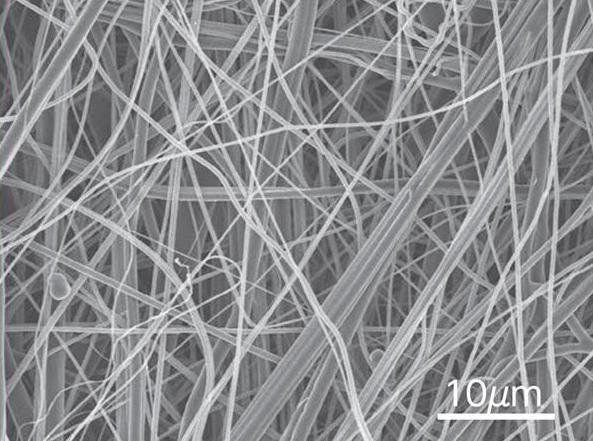
The performance of a filtration-grade meltblown layer depends on several connected factors:
- Fiber diameter and distribution: Fine, consistently formed fibers can support effective particle capture.
- Pore structure: The arrangement of fibers affects both particle penetration and airflow.
- Basis weight (GSM): Fabric weight influences material structure but does not independently determine filtration performance.
- Electrostatic properties: Charged fibers can capture particles without relying entirely on mechanical filtration.
- Production consistency: Variations across a roll or between batches may affect finished-product reliability.
A heavier or thicker fabric is not automatically better.
For example, increasing fiber density may improve mechanical particle capture while also increasing breathing resistance. The objective is to balance filtration performance with acceptable airflow.
Meltblown Filtration Efficiency: Understanding BFE vs PFE
Filtration efficiency is one of the most important indicators when evaluating meltblown material for medical masks.
However, suppliers may report different filtration values that are not directly interchangeable.
BFE vs PFE Meltblown: What Is the Difference?
| Parameter | BFE | PFE |
|---|---|---|
| Full name | Bacterial Filtration Efficiency | Particle Filtration Efficiency |
| Measures | Filtration of a bacterial aerosol challenge | Filtration of specified aerosol particles |
| Common test method | ASTM F2101 | ASTM F2299/F2299M, depending on application |
| Main purpose | Evaluate bacterial aerosol filtration | Evaluate particulate filtration |
| Important limitation | Does not establish respirator protection | Results depend on particle size and test conditions |
ASTM F2101 evaluates bacterial filtration efficiency using a biological aerosol, while ASTM F2299/F2299M measures particle penetration through mask materials under specified conditions.
accessdata.fda.gov
+1
A material advertised as BFE99 filter material should therefore be supported by a relevant test report showing the tested material configuration and applicable method.
A BFE result of 99% does not automatically mean the material also achieves 99% PFE.
Why Meltblown Fabric Filtration Efficiency Must Be Verified
When reviewing test reports, buyers should check:
- Which test standard was used?
- What particle size or aerosol challenge was applied?
- What airflow or test velocity was used?
- Was the sample a single meltblown layer or a multilayer composite?
- Does the report identify the supplied material and tested batch?
Important: A filtration result from an individual material layer does not guarantee that the finished medical mask will meet its applicable performance requirements.
Electrostatic Meltblown: Why Charge Stability Matters
Many high-efficiency filtration materials use electrostatic treatment to improve particle capture.
In electrostatic meltblown fabric, charged fibers attract certain airborne particles. This can improve filtration without requiring the same increase in fiber density that purely mechanical filtration might need.
This is particularly useful when manufacturers need both effective filtration and low airflow resistance.
Electrostatic Charge Decay Meltblown: What Buyers Should Know
Electrostatic charge retention can change with environmental exposure, storage conditions, and material formulation.
Potential concerns include:
- Exposure to elevated temperatures or humidity
- Contact with certain chemicals or liquids
- Improper storage or handling
- Performance changes over extended storage periods
For long-term procurement, buyers should consider initial filtration results alongside performance after relevant conditioning or aging tests.
A strong initial result alone is not sufficient evidence of stable performance throughout a product’s intended shelf life.
Meltblown Breathability: Understanding Pressure Drop
Good filtration performance must be balanced with adequate breathability.
Meltblown breathability is commonly evaluated through airflow resistance, often described as pressure drop or differential pressure.
Meltblown Pressure Drop and Breathability
Pressure drop measures the pressure difference required to move air through a material at specified testing conditions.
Generally:
- Lower pressure drop indicates less airflow resistance under comparable conditions.
- Higher pressure drop indicates greater resistance to airflow.
- Higher filtration efficiency does not always mean higher pressure drop, particularly when effective electrostatic filtration is used.
This makes filtration efficiency and pressure drop important parameters to evaluate together.
How to Interpret Meltblown Fabric Resistance (Pa)
Airflow resistance may be reported in pascals (Pa), while some medical mask standards express differential pressure in Pa/cm².
These values should not be compared directly without understanding the test area and methodology.
For meaningful comparisons, confirm that samples were tested using the same airflow rate, exposed area, layer configuration, and test method.
A lower pressure-drop result is useful only when the material also meets the required filtration performance.
How to Test Meltblown Fabric Quality Before Bulk Purchasing
Procurement teams do not necessarily need their own laboratory, but they should establish a repeatable material evaluation process.
Recommended five-step inspection process
Step 1 — Define the intended application
Identify whether the material is intended for a medical face mask, respirator filter, or another medical filtration application. Requirements differ by finished product.
Step 2 — Request test documentation
Obtain filtration efficiency, pressure drop, GSM, and relevant material specifications. Verify testing methods and sample identification.
Step 3 — Test representative samples
Evaluate samples using methods appropriate to the intended product. Where necessary, arrange independent laboratory testing.
Step 4 — Review consistency across batches
Check whether the supplier uses defined sampling procedures, acceptance limits, and traceable production records.
Step 5 — Validate the finished product
Confirm that the completed medical product meets applicable performance and regulatory requirements. Raw-material testing cannot replace finished-product evaluation.
Meltblown Quality Control Testing: What Reliable Suppliers Should Provide
Consistent quality becomes especially important when purchasing large production volumes.
Before selecting a supplier, request documentation that supports repeatable manufacturing performance rather than relying exclusively on a sample test.
A useful supplier evaluation checklist includes:
| Quality indicator | What buyers should request |
|---|---|
| Filtration performance | Applicable BFE/PFE test reports |
| Airflow resistance | Pressure-drop results with test conditions |
| Material consistency | GSM specifications and tolerance limits |
| Electrostatic stability | Relevant aging or conditioning test data |
| Traceability | Lot numbers and batch identification |
| Quality management | Quality control procedures and relevant supporting documentation |
For European and US markets, buyers should also verify which product-specific standards and regulatory requirements apply to the finished medical device.
Avoid one common purchasing mistake: selecting meltblown material using only its advertised filtration percentage.
A reliable purchasing decision considers filtration, pressure drop, stability, batch consistency, and documentation together.
Conclusion: Better Meltblown Fabric Quality Starts With Better Evaluation
Reliable meltblown fabric quality is determined by measurable performance, not appearance or GSM alone.
For B2B buyers, the most important considerations are filtration efficiency, airflow resistance, electrostatic stability, and consistent quality control.
Before confirming a bulk purchase, compare test results under equivalent conditions and ensure the selected material is suitable for your finished medical product.
For more information about medical material applications, visit Shuer Medical’s official website. You can also review the company’s certification documentation to understand its published quality management and medical device documentation.
Evaluating meltblown materials for your next production project? Contact the Shuer Medical team to discuss material specifications, test documentation, and sourcing requirements.
3. Frequently Asked Questions (FAQ)
1. How to test meltblown fabric quality?
Evaluate filtration efficiency, pressure drop, material weight, and production consistency. Use appropriate laboratory test methods and compare results from representative samples. For electrostatic materials, consider stability after relevant storage or conditioning tests.
2. What is the difference between BFE and PFE in meltblown fabric?
BFE measures filtration against a specified bacterial aerosol, while PFE measures filtration against defined aerosol particles. The methods use different test conditions, so their reported percentages are not directly interchangeable.
3. What causes electrostatic charge decay in meltblown fabric?
Electrostatic charge retention may be affected by heat, humidity, chemical exposure, and storage conditions. The extent of performance change depends on material formulation, treatment, and environmental exposure.
4. What is a good meltblown fabric resistance (Pa) value?
There is no universal ideal resistance value for all meltblown fabrics. Acceptable pressure drop depends on the intended application, test method, airflow, sample area, and required filtration efficiency.
5. Does BFE99 filter material guarantee 99% filtration in a medical mask?
No. A BFE99 result applies to the material or sample configuration tested under specified conditions. Finished-mask performance depends on the complete construction and must be evaluated separately.
6. How often should meltblown quality control testing be performed?
Testing frequency should follow a risk-based quality control plan that considers production variability, supplier history, material requirements, and applicable standards. Critical performance should be verified at defined intervals and when relevant process changes occur.