
2026-11-13
How Graphene Medical Uses Are Shaping the Future of Modern Healthcare
Graphene is attracting increasing attention in medical research because of its distinctive electrical conductivity, mechanical strength, large surface area, and potential antibacterial properties. From medical textiles and wound dressings to diagnostic sensors and drug delivery systems, graphene-based materials are opening up new possibilities for healthcare innovation.
But what are the actual graphene medical uses, and which applications are already practical for medical manufacturers and buyers?
Graphene is not a single-purpose medical material. Its applications range from experimental biomedical technologies to functional material development. Understanding these differences helps healthcare buyers evaluate its potential, identify suitable applications, and avoid exaggerated product claims.
What Is Graphene and Why Is It Important in Healthcare?
Graphene is a two-dimensional carbon-based material consisting of a single layer of carbon atoms arranged in a hexagonal structure.

Its physical and chemical properties make it interesting for medical applications, particularly when incorporated into polymers, coatings, composites, and other functional materials.
Some important characteristics include:
- High electrical conductivity: Supports the development of sensitive diagnostic sensors.
- Large specific surface area: Provides opportunities for attaching biological molecules and therapeutic compounds.
- Mechanical strength: Can improve the functional properties of certain composite materials.
- Adjustable surface chemistry: Allows researchers to modify graphene-based materials for different applications.
- Potential antibacterial activity: Certain graphene derivatives have demonstrated antimicrobial effects under specific experimental conditions.
Importantly, graphene, graphene oxide (GO), and reduced graphene oxide (rGO) are different materials. Their properties and biological interactions are not interchangeable. This distinction is essential when evaluating graphene biomedical applications.
5 Major Graphene Medical Applications in Modern Healthcare
Graphene medical applications cover several areas, from everyday medical materials to advanced diagnostic technologies. The following are five important areas attracting research and commercial interest.
1. Graphene in Antibacterial Medical Materials
One of the most interesting areas of graphene in healthcare is the development of antibacterial materials.

Certain graphene-based materials, particularly graphene oxide, have demonstrated antibacterial activity in laboratory research. Proposed mechanisms include physical interactions with bacterial cell membranes and oxidative stress.
Potential applications include:
- Antibacterial medical textiles
- Medical masks and protective materials
- Medical surface coatings
- Disposable healthcare products
- Antibacterial wound care materials
However, antibacterial performance depends on factors such as graphene type, concentration, surface modification, and material structure.
For medical buyers, the key question is not simply whether a product contains graphene, but whether the finished material has demonstrated measurable antibacterial performance through appropriate testing.
2. Graphene in Wound Dressings and Wound Healing
Graphene-based composites are also being investigated for wound care.
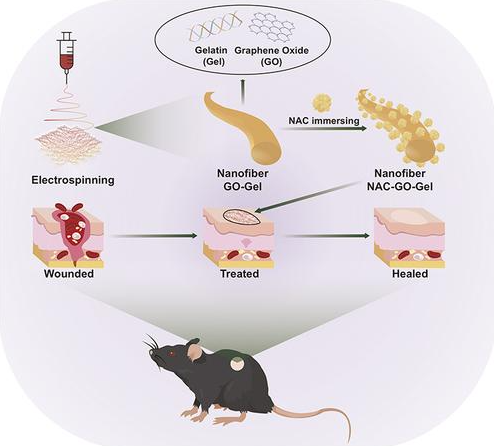
Researchers are exploring how graphene oxide can be incorporated into hydrogels, polymer films, and fibrous materials to develop advanced wound dressings.
Potential benefits include:
- Supporting the development of antibacterial wound dressings.
- Improving the functional properties of dressing materials.
- Providing platforms for controlled therapeutic delivery.
- Supporting research into wound microenvironment management.
Nevertheless, laboratory findings should not be interpreted as proof that every graphene-containing dressing accelerates wound healing. Clinical performance requires product-specific evaluation.
3. Graphene-Based Biosensors in Medical Diagnosis
Graphene’s electrical conductivity and large surface area make it a promising material for biosensor development.
Graphene-based biosensors can be designed to interact with biological molecules, potentially enabling the detection of specific biomarkers.
Research applications include:
- Glucose monitoring
- Protein and biomarker detection
- Disease-related molecular analysis
- Point-of-care diagnostic technologies
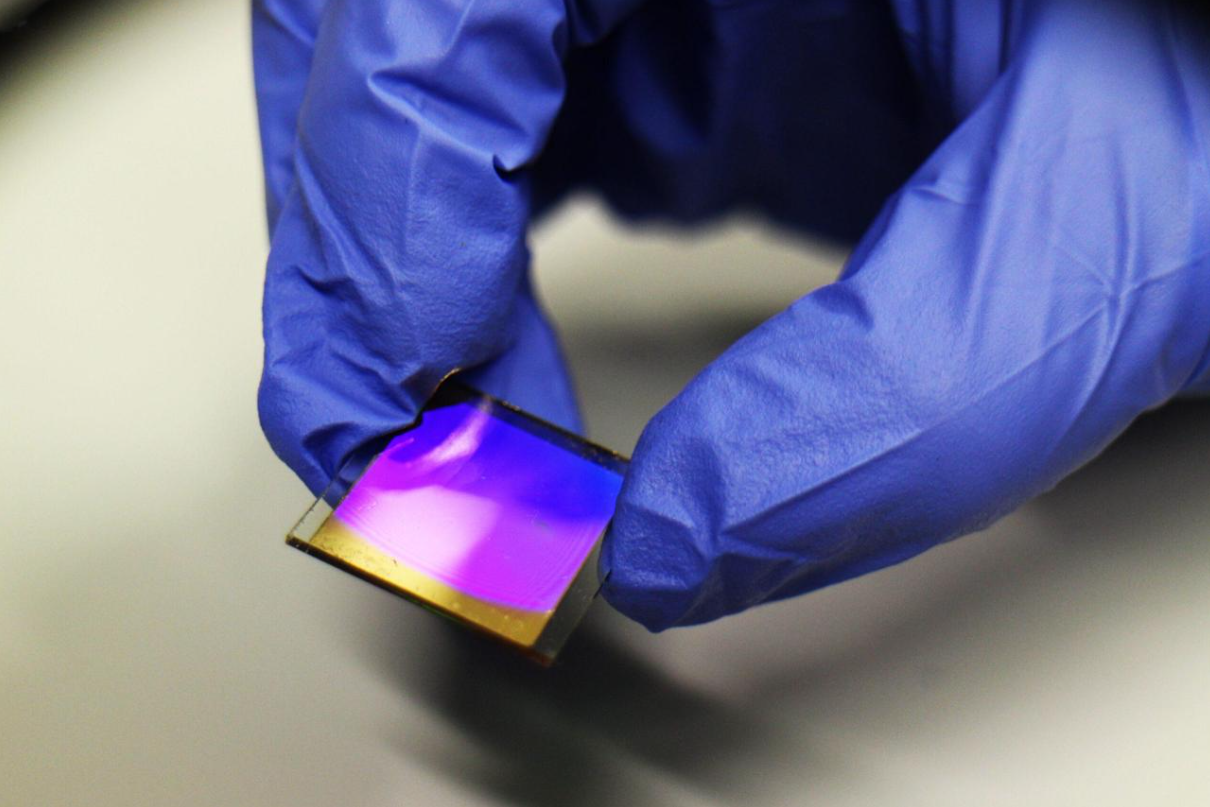
These technologies may contribute to more sensitive and compact diagnostic systems. However, their practical value depends on detection accuracy, reproducibility, stability, and clinical validation.
4. Graphene for Drug Delivery in Medicine
Another emerging area is graphene-based drug delivery.
Graphene oxide has a large surface area and functional groups that allow researchers to attach or load certain therapeutic compounds.
Scientists are investigating its potential to:
- Carry therapeutic molecules.
- Support controlled drug release.
- Improve targeted delivery strategies.
- Develop multifunctional therapeutic platforms.
Most of these applications remain research-oriented. Questions regarding toxicity, degradation, distribution, and long-term biological effects must be addressed before broader clinical adoption.
5. Graphene Applications in Medical Devices
Graphene medical devices represent another promising research direction.
Its electrical and mechanical properties make graphene-based composites attractive for developing:
- Flexible biomedical sensors
- Conductive medical coatings
- Wearable health monitoring devices
- Tissue engineering scaffolds
- Advanced diagnostic components
The actual performance of these devices depends on the complete material formulation and device design, rather than graphene alone.
Research reviews have identified biosensing, medical coatings, tissue engineering, and drug delivery as important development directions. ScienceDirect+2
How Is Graphene Used in Healthcare? From Research to Medical Products
Although graphene has many potential medical applications, not all of them have reached commercial production or routine clinical use.
For manufacturers and B2B buyers, it is useful to distinguish three development stages.
| Development stage | Typical applications | Current status |
|---|---|---|
| Functional material development | Antibacterial nonwovens, polymer composites, protective materials | Product-specific commercial development and testing |
| Advanced medical technology | Biosensors, conductive coatings, diagnostic components | Active research and technology development |
| Emerging therapeutic applications | Targeted drug delivery, tissue engineering, advanced wound care | Largely research and preclinical development |
For example, graphene can be incorporated into polymer-based materials through different manufacturing approaches. In medical textiles, one possible approach is incorporating graphene-related additives into a polymer formulation before producing nonwoven fabrics.
This creates opportunities to develop functional materials for disposable medical and personal care products.
However, the addition of graphene does not automatically make a material antibacterial, biocompatible, or suitable for medical use. These properties must be evaluated through appropriate testing.
What Are the Advantages of Graphene in Healthcare?
The potential advantages of graphene in healthcare come from its combination of physical, electrical, and chemical properties.
For medical manufacturers and procurement professionals, the most relevant advantages include:
- Functional material innovation: Graphene can introduce additional functional characteristics into existing material systems.
- Antibacterial research potential: Certain graphene derivatives demonstrate antimicrobial activity under controlled conditions.
- Advanced sensing capabilities: Electrical properties support the development of new diagnostic technologies.
- Material versatility: Graphene can be combined with polymers, hydrogels, and other materials.
- Product development opportunities: It creates possibilities for developing differentiated medical textiles and healthcare products.
These advantages should always be evaluated against manufacturing costs, material consistency, product performance, and regulatory requirements.
Is Graphene Safe for Medical Applications?
Graphene safety is one of the most important considerations in medical product development.
The safety of graphene-based materials depends on several factors:
- Graphene type and chemical composition.
- Particle size, thickness, and surface characteristics.
- Concentration and exposure levels.
- Manufacturing and incorporation methods.
- Whether the material contacts intact skin, damaged skin, or internal tissues.
- Potential particle release during product use.
Research has identified both promising biocompatibility results and potential cytotoxicity concerns. Therefore, graphene should not automatically be classified as safe simply because it is carbon-based.
For medical product manufacturers and buyers, the following checks are particularly important:
- Request material composition and technical documentation.
- Review relevant biocompatibility test reports.
- Evaluate the finished product rather than relying exclusively on raw material test results.
- Confirm that applicable medical device regulations and product standards are met.
- Check whether the material can migrate, shed, or release particles during normal use.
A graphene-containing product should be assessed according to its intended use and actual exposure conditions. PubMed Central (PMC)+1
What Should Medical Buyers Consider When Choosing Graphene-Based Materials?
For B2B procurement teams, evaluating graphene medical uses requires more than understanding the technology. It also requires checking whether the material can deliver consistent performance in a finished product.
Before selecting a graphene-based medical material, consider these five factors:
| Evaluation factor | What buyers should check |
|---|---|
| Material composition | Graphene type, additives, concentration, and manufacturing process |
| Functional performance | Antibacterial activity and other claimed properties |
| Product compatibility | Whether the material is suitable for its intended medical application |
| Quality consistency | Batch-to-batch stability and production controls |
| Documentation | Test reports, technical specifications, and relevant certifications |
A practical recommendation: Do not evaluate a graphene medical product based on marketing descriptions alone. Request test reports, technical specifications, and samples of the finished product before making procurement decisions.
As graphene technology continues to develop, the most commercially relevant opportunities may come from combining functional materials with established medical product manufacturing processes.
Conclusion: The Growing Potential of Graphene Medical Uses
Graphene medical uses extend across antibacterial materials, wound care, biosensors, drug delivery, and advanced medical devices.
While some applications remain in the research stage, graphene-based functional materials are creating new opportunities for medical product development.
For healthcare manufacturers and procurement professionals, the key is to understand the differences between research potential and verified product performance.
Choosing the right graphene-based material requires careful attention to composition, testing, safety, manufacturing consistency, and intended application.
Interested in learning more about graphene-based medical materials? Explore our graphene nonwoven material technology to understand how graphene-related materials can be incorporated into healthcare and personal care product development.
You can also contact our team to discuss material specifications and potential cooperation opportunities.
Frequently Asked Questions (FAQ)
1. What is graphene used for in medicine?
Graphene is being investigated for antibacterial materials, wound dressings, biosensors, drug delivery systems, tissue engineering, and medical device components. Some applications are commercially developing, while others remain experimental.
2. How is graphene used in healthcare?
Graphene is incorporated into or combined with other materials to develop functional medical textiles, coatings, diagnostic sensors, and biomedical composites. Its application depends on the graphene type and manufacturing process.
3. What are the main graphene biomedical applications?
Major graphene biomedical applications include biosensing, drug delivery, antibacterial materials, wound care, tissue engineering, medical imaging, and advanced medical devices.
4. What are graphene antibacterial materials?
Graphene antibacterial materials are materials containing graphene or its derivatives that may inhibit bacterial growth through mechanisms such as membrane interaction and oxidative stress. Their effectiveness requires appropriate testing.
5. Can graphene be used in wound dressings and wound healing?
Yes. Graphene-based composites are being investigated for wound dressings, particularly for their potential antibacterial and material-enhancing properties. However, clinical wound-healing benefits require further product-specific evidence.
6. How are graphene-based biosensors used in medical diagnosis?
Graphene-based biosensors use graphene’s electrical and surface properties to detect biological molecules, including proteins and other biomarkers. They are being researched for sensitive diagnostic and monitoring technologies.
7. Is graphene used for drug delivery in medicine?
Yes. Graphene oxide is being investigated as a drug delivery platform because of its large surface area and ability to bind certain therapeutic molecules. Most applications remain at the research or preclinical stage.
8. Is graphene used in commercial medical products?
Yes, graphene-containing materials have commercial development and application opportunities, particularly in functional materials and medical product manufacturing. However, commercial availability does not establish clinical effectiveness or regulatory approval.
9. Is graphene safe for medical applications?
Graphene safety depends on its chemical structure, concentration, exposure route, and intended application. Product-specific biocompatibility and safety assessments are necessary before medical use.
10. What are the advantages of graphene in healthcare?
Potential advantages include electrical conductivity, large surface area, mechanical strength, adjustable surface chemistry, and antibacterial potential. These properties support the development of new medical materials and technologies.