
2026-11-13
Graphene Benefits for Health: Exploring Its Antibacterial Properties and Applications in Healthcare
Graphene is gaining attention in healthcare because of its unique physical and chemical properties, particularly its potential antibacterial activity. Researchers are exploring how graphene-based materials can interact with bacteria and support the development of new medical materials, protective textiles, and healthcare products.
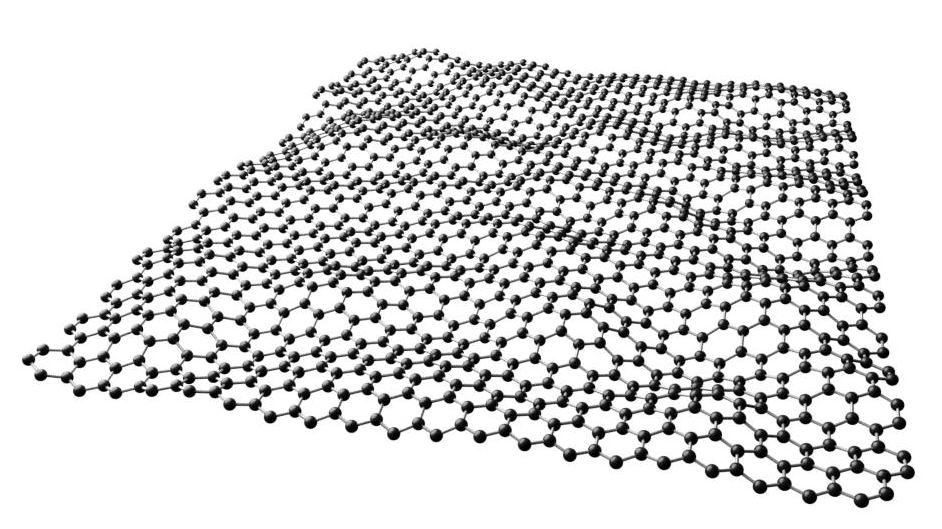
But what are the actual graphene benefits for health, and how can this material be used in medical applications?
Graphene is not a medicine or a guaranteed solution for preventing infections. Instead, its potential lies in its ability to provide functional properties to materials, including antibacterial activity under specific conditions.
This article explains how graphene works as an antibacterial material, its potential applications in healthcare, its safety considerations, and what medical product buyers should know before choosing graphene-based materials.
1. What Are the Health Benefits of Graphene?
Graphene is an advanced carbon-based material consisting of a single layer of carbon atoms arranged in a hexagonal structure. Its derivatives, including graphene oxide and reduced graphene oxide, have different chemical and physical properties.
These materials have attracted interest in healthcare because of several characteristics.
The potential graphene health benefits include:
- Antibacterial activity: Certain graphene-based materials can inhibit or damage bacterial cells under suitable conditions.
- Antimicrobial potential: Research has investigated their activity against different microorganisms.
- Medical material development: Graphene can be incorporated into coatings, composites, and functional textiles.
- Advanced wound care research: Graphene-based composites are being investigated for potential use in wound dressings and related materials.
- Functional surface modification: Graphene may help introduce additional functional properties to conventional material surfaces.
It is important to distinguish between research potential and proven clinical benefits. Most graphene antibacterial research remains focused on laboratory experiments and material development.
For medical product buyers, the most relevant opportunity is the development of functional medical materials rather than treating graphene itself as a healthcare product.
2. How Do Graphene Antibacterial Properties Work?
The graphene antibacterial properties have been studied through several possible mechanisms. These mechanisms depend on the type of graphene material, its structure, concentration, surface characteristics, and contact conditions.
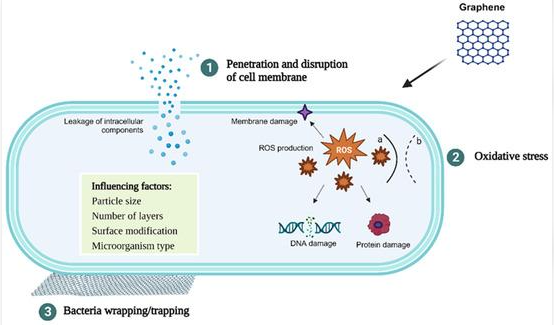
2.1 Physical Damage to Bacterial Cell Membranes
One proposed mechanism involves direct physical interaction between graphene-based materials and bacterial cell membranes.
The sharp edges of certain graphene sheets may interact with bacterial membranes, causing structural damage and potentially affecting cell integrity.
When bacterial membranes are damaged, essential cellular contents may leak out, reducing bacterial viability.
2.2 Oxidative Stress
Another proposed mechanism involves oxidative stress.
Certain graphene-based materials may promote oxidative processes that damage important bacterial components, including:
- Cell membrane structures
- Proteins
- Other essential cellular components
The extent of this effect depends on material properties and testing conditions.
2.3 Bacterial Wrapping and Surface Interaction
Graphene sheets may also attach to or surround bacterial cells.
This interaction can interfere with normal cellular activities and may restrict the movement or transport processes of bacterial cells.
However, researchers have not established one universal mechanism. Different graphene materials may work through different combinations of physical and chemical interactions.
How Does Graphene Kill Bacteria?
In simple terms, certain graphene-based materials can interfere with bacterial cell structures through physical contact, oxidative stress, and surface interactions.
These mechanisms may reduce bacterial survival under suitable experimental conditions. However, antibacterial performance should always be verified through testing of the actual finished material.
3. Graphene Antibacterial Properties Against Common Bacteria
Research has investigated graphene antimicrobial properties against both Gram-positive and Gram-negative bacteria.
Two commonly studied microorganisms are Escherichia coli (E. coli) and Staphylococcus aureus (S. aureus).
3.1 Graphene Antibacterial Properties Against E. coli
E. coli is a Gram-negative bacterium commonly used in antibacterial material research.
Studies have investigated how graphene oxide and other graphene-based materials interact with its cell membrane and affect bacterial viability.
Possible effects include:
- Physical damage to the bacterial membrane.
- Changes in membrane permeability.
- Oxidative stress.
- Reduced bacterial viability under specific experimental conditions.
3.2 Graphene Antibacterial Properties Against Staphylococcus aureus
S. aureus is a Gram-positive bacterium frequently studied in healthcare-related antibacterial research.
Research suggests that certain graphene-based materials can affect its membrane structure and cellular activity.
This makes S. aureus an important microorganism to consider when evaluating antibacterial medical materials.
Important for buyers: Results from laboratory studies cannot automatically be applied to every graphene-containing product. Antibacterial performance depends on the formulation, material concentration, manufacturing process, and test method.
A supplier should provide relevant antibacterial test reports for the actual material or finished product rather than relying solely on published graphene research.
4. Applications of Graphene in Healthcare
The applications of graphene in healthcare extend beyond antibacterial research. Its electrical, mechanical, and surface properties have made it an interesting material for developing advanced medical products.
Some important research and development areas include:
4.1 Graphene in Antibacterial Medical Textiles
One promising direction is incorporating graphene-based materials into textile structures.

Potential applications include:
- Medical protective gowns
- Disposable medical bed sheets
- Medical masks and protective textiles
- Wound dressing materials
- Healthcare-related protective fabrics
In these applications, graphene may be incorporated into a textile through different manufacturing approaches, such as coating, surface modification, or blending with other materials.
For disposable medical textiles, buyers should pay particular attention to:
- Material integration: How is graphene incorporated into the nonwoven fabric?
- Antibacterial performance: Has the finished material been tested against relevant microorganisms?
- Material stability: Does the functional performance remain consistent during intended use?
- Physical properties: Does the material maintain suitable softness, strength, breathability, and other required characteristics?
- Product compliance: Does the finished product meet the regulatory requirements of its intended market?
A graphene-containing fabric is not automatically an antibacterial medical textile. Its performance must be demonstrated through appropriate testing.
4.2 Graphene-Based Wound Dressings
Researchers are investigating graphene-based composites for wound care applications.
Potential functions include antibacterial surface activity and the development of materials with specific physical or chemical properties.
However, direct contact with damaged skin and wound tissue requires careful biocompatibility evaluation. Research findings should not be interpreted as proof that every graphene-based dressing is safe or clinically effective.
4.3 Graphene Medical Coatings and Devices
Graphene-based materials are also being investigated for functional coatings and medical device surfaces.
Their potential applications include:
- Antibacterial surface coatings
- Functional medical device materials
- Biosensors and diagnostic technologies
- Advanced biomedical composites

These applications remain at different stages of research and development, and their commercial readiness varies.
5. Is Graphene Safe for Human Skin?
Safety is an important consideration when evaluating graphene medical materials, particularly products intended for prolonged skin contact.
The answer depends on the specific graphene material and how it is used.
Factors that can influence safety include:
- Graphene type and chemical composition.
- Particle size and surface characteristics.
- Concentration and distribution within the material.
- Whether particles can be released during normal use.
- Duration and route of human exposure.
- The intended application, including intact or damaged skin contact.
Is Graphene Toxic to the Human Body?
Graphene should not be described as universally toxic or universally safe.
Scientific studies have reported different biological responses depending on the graphene formulation, exposure level, and experimental conditions. Some graphene-based materials have demonstrated potential cytotoxic effects, while others have shown acceptable compatibility in specific experimental settings.
Importantly, evidence from one graphene formulation cannot establish the safety of another.
For manufacturers and medical product buyers, the following checks are recommended:
| Evaluation area | What to check |
|---|---|
| Material characterization | Graphene type, composition, and concentration |
| Biocompatibility | Relevant cytotoxicity and biological safety data |
| Skin contact | Suitability for the intended contact duration and application |
| Particle release | Potential release during handling and use |
| Product testing | Test results for the actual finished product |
For medical products, buyers should also assess applicable regulatory requirements and request supporting technical documentation.
6. How to Evaluate Graphene Medical Materials Before Purchasing
For B2B buyers, understanding the material is only the first step. The more important question is whether the supplier can provide consistent quality and verifiable performance.
Before selecting a graphene medical material supplier, consider these five factors:
1. Ask about the graphene formulation.
Find out whether the material uses graphene, graphene oxide, reduced graphene oxide, or another graphene-based formulation.
2. Request antibacterial test reports.
Check which microorganisms were tested, the testing method, contact time, and reported antibacterial results.
3. Evaluate the base material.
For graphene nonwoven fabrics, check GSM, tensile strength, softness, breathability, and other relevant physical properties.
4. Verify product-specific compliance.
Do not assume that a graphene raw material certificate automatically establishes compliance of a finished medical product. Review the relevant product documentation for the intended market.
5. Evaluate manufacturing consistency.
Ask whether the supplier can provide stable specifications, batch records, quality control procedures, and samples for evaluation.
These steps help buyers distinguish between suppliers with documented material capabilities and those relying mainly on general graphene marketing claims.
7. Conclusion: Understanding the Real Graphene Benefits for Health
Graphene offers interesting possibilities for healthcare, particularly in antibacterial material research and the development of functional medical textiles.
Its potential antibacterial mechanisms include physical membrane damage, oxidative stress, and interactions with bacterial cell surfaces. Research has also explored its applications in wound dressings, medical coatings, and biomedical devices.
However, graphene is not a universal infection-prevention solution. Its antibacterial performance and safety depend on the specific material, formulation, manufacturing process, and intended application.
For medical product buyers, the best approach is to focus on verified test results, material specifications, product compliance, and supplier manufacturing capabilities.
Interested in exploring graphene nonwoven materials for medical or personal care applications? Visit our graphene nonwoven material technology page to learn more, or contact our team to discuss your material requirements and potential cooperation.
FAQ
1. What are the health benefits of graphene?
Graphene-based materials have potential antibacterial properties and are being researched for medical textiles, wound dressings, functional coatings, and biomedical devices. Their benefits depend on the specific formulation and application.
2. How does graphene kill bacteria?
Certain graphene-based materials may damage bacterial cell membranes, induce oxidative stress, or interact with bacterial surfaces. These mechanisms can reduce bacterial viability under suitable conditions.
3. How does graphene work as an antibacterial material?
Graphene works through a combination of physical and chemical interactions. These may include membrane disruption, oxidative stress, and bacterial cell wrapping. The dominant mechanism depends on the material’s characteristics.
4. What are graphene antibacterial properties against E. coli?
Studies have reported antibacterial activity of certain graphene-based materials against E. coli. The results vary depending on graphene type, concentration, exposure time, and testing conditions.
5. What are graphene antibacterial properties against Staphylococcus aureus?
Certain graphene-based materials have demonstrated antibacterial activity against S. aureus in laboratory studies. However, performance must be verified for each specific material or finished product.
6. What are the applications of graphene in healthcare?
Potential applications include antibacterial medical textiles, wound dressings, medical coatings, biosensors, diagnostic technologies, and advanced biomedical materials.
7. Can graphene be used in antibacterial medical textiles?
Yes. Graphene-based materials can be incorporated into textile structures through different manufacturing processes. Their antibacterial performance and suitability for medical use must be verified through appropriate testing.
8. Is graphene safe for human skin?
It depends on the graphene formulation, concentration, exposure conditions, and intended application. Biocompatibility and skin-contact evaluations are necessary before using graphene-based materials in healthcare products.
9. Is graphene toxic to the human body?
Not all graphene materials have the same toxicity profile. Their biological effects vary with material characteristics and exposure routes. More product-specific safety evidence is needed for reliable evaluation.
10. Can graphene prevent bacterial infections?
Graphene-based materials may help reduce bacterial contamination on certain surfaces under tested conditions. However, they should not be considered a standalone method of preventing infections or a replacement for established infection-control practices.