
2026-09-10
Buying Masks in Bulk? How to Choose the Right Surgical, Medical Protective or Disposable Mask
Subtitle: A Practical Guide to Standards, Certifications, Filtration, MOQ and Lead Time for B2B Buyers
If you are buying masks for a hospital, clinic, distributor, supermarket chain, or workplace, this question usually comes up sooner or later:
Which mask is better, N95 or KN95?
The short answer is: neither is automatically “better.” They are different respirators tested under different standards and certification systems.
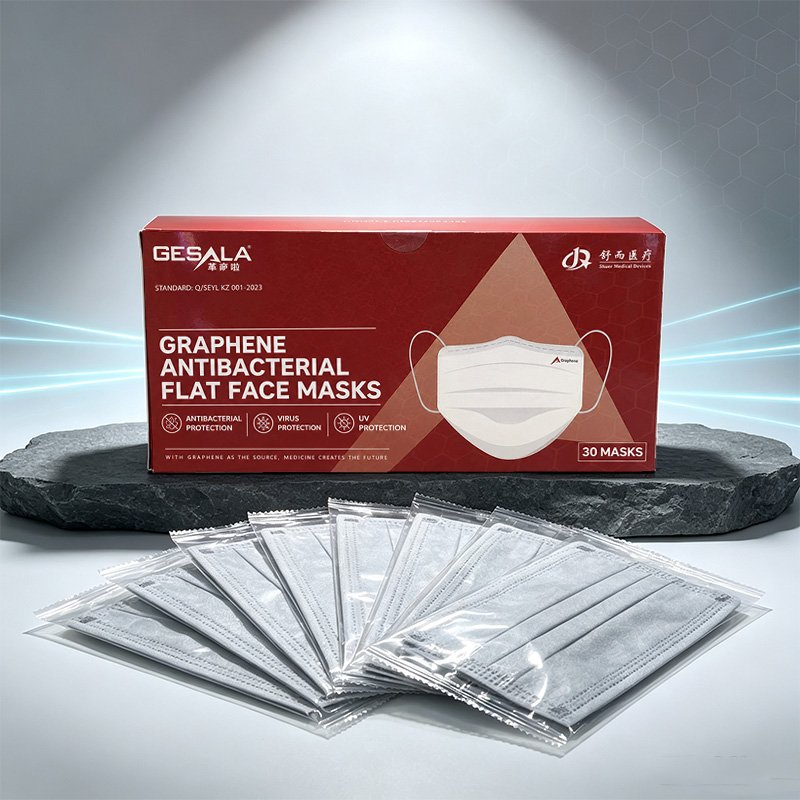
An N95 is a U.S. NIOSH-approved filtering facepiece respirator when it carries the appropriate approval. A KN95 is an international filtering facepiece respirator designed to meet the requirements of its applicable standard. Both are designed to provide respiratory protection against particles, but the actual protection a wearer receives also depends heavily on fit, certification, manufacturing quality, and how the mask is used.
That is why choosing a mask for a large procurement project should not start with the question, “Which one has the highest filtration number?”
It should start with a simpler question:
What kind of protection does the user actually need?
For a medical distributor looking for bulk surgical masks wholesale, this distinction becomes especially important because a surgical mask, a medical protective mask, and a respirator are not interchangeable products.
What Are the Three Main Types of Masks Used in Procurement?
When buyers compare masks from different manufacturers, three broad categories appear frequently:
- Surgical masks
- Medical protective masks or respirators
- Civil or disposable masks
They may look similar on a product page, but their intended use is quite different.
1. Surgical Masks
Surgical masks are primarily designed for medical environments where protection from droplets, splashes and bodily fluids is important.
For example, Shuer Medical’s surgical mask is manufactured from spunbond non-woven fabric and melt-blown non-woven fabric. The product is manufactured according to YY 0469-2023, with BFE and PFE above 95%, splash resistance above 16 kPa and pressure difference below 49 Pa. The stated application includes basic protection for medical personnel and protection against body fluids and splashes during invasive procedures.
This makes a surgical mask more suitable for environments such as:
- Hospitals
- Clinics
- Dental clinics
- Outpatient departments
- Nursing facilities
- Medical procedures where splash protection is required
One important point is often missed during purchasing: a surgical mask is not the same thing as a tight-fitting respirator.
A surgical mask is loose-fitting, while a respirator is designed to seal more closely against the face. CDC/NIOSH guidance notes that surgical masks do not provide the same reliable protection against small airborne particles as a properly fitted respirator.
2. Medical Protective Masks
So what about a medical protective mask?
This category is intended for situations where protection against airborne respiratory particles is more important.
Shuer Medical’s medical protective mask follows GB 19083-2023. Its listed performance includes bacterial filtration efficiency of at least 95% and non-oily particle filtration efficiency of at least 95%. The product is intended for medical staff and related personnel requiring protection against respiratory infectious diseases transmitted through the air.
That makes this type of mask more relevant to:
- Hospitals
- Infectious disease departments
- High-risk clinical environments
- Medical personnel
- Situations involving airborne respiratory hazards
For buyers working on medical protective mask procurement, the product standard should therefore be checked before the price.
A mask that looks like an N95-style respirator does not automatically qualify as a medical protective mask.
3. Civil Disposable Masks
Then there is the third category: disposable masks for general or civil use.
This is where the civil disposable mask difference becomes important.
Civil disposable masks are generally designed for everyday environments rather than specialized medical procedures. Depending on the applicable standard and product design, they may be used for daily protection against particles and droplets.
For example, Shuer’s disposable flat mask uses spunbond non-woven fabric and melt-blown non-woven fabric. The product information lists BFE and PFE above 95%, splash resistance above 16 kPa and pressure difference below 49 Pa, with the stated application being protection in daily-life environments.
Typical applications include:
- Supermarkets
- Schools
- Offices
- Public transportation
- Retail distribution
- General workplace use
- Everyday consumer protection
The key point is that filtration performance alone does not determine whether a mask is suitable for medical use.
The intended use, standard, certification, fluid resistance, fit and regulatory classification all matter.
So Which Mask Should a Buyer Choose?
If the buyer is supplying a hospital, a surgical mask may be the appropriate choice for many routine procedures.
If workers need protection from airborne particles, a properly certified respirator or medical protective mask may be more appropriate.
If the buyer is supplying supermarkets, offices, schools or general consumers, a civil disposable mask may be sufficient depending on the local requirements.
In other words:
The best mask is not necessarily the mask with the highest filtration number. It is the mask that matches the risk.
This is particularly important when purchasing tens or hundreds of thousands of pieces. Choosing the wrong category can create problems with certification, customs clearance, product registration and downstream distribution.
What Is the Difference Between N95 and KN95?
Another common question from international buyers is:
Which mask is better, N95 or KN95?
N95 and KN95 should not simply be treated as two brand names for the same product.
An N95 respirator is evaluated and approved by NIOSH under the U.S. respiratory protection system. NIOSH explains that N95 filtering facepiece respirators filter at least 95% of airborne particles and are designed to seal closely against the face.
KN95 respirators are international filtering facepiece respirators made according to the applicable international standard. They are also intended to protect against particles, but the certification and approval route is different. CDC guidance specifically distinguishes international respirators such as KN95s from NIOSH-approved N95 respirators.
So, for a B2B buyer, the better question is:
Which certification system does my destination market require?
That question is much more useful than simply asking whether N95 is better than KN95.
Shuer Medical’s current product range includes N95/KN95 3D protective masks manufactured with spunbond non-woven fabric, melt-blown non-woven fabric and hot-air cotton. The listed standard is GB 2626-2019, with bacterial filtration efficiency and non-oily particle filtration efficiency of at least 95%.
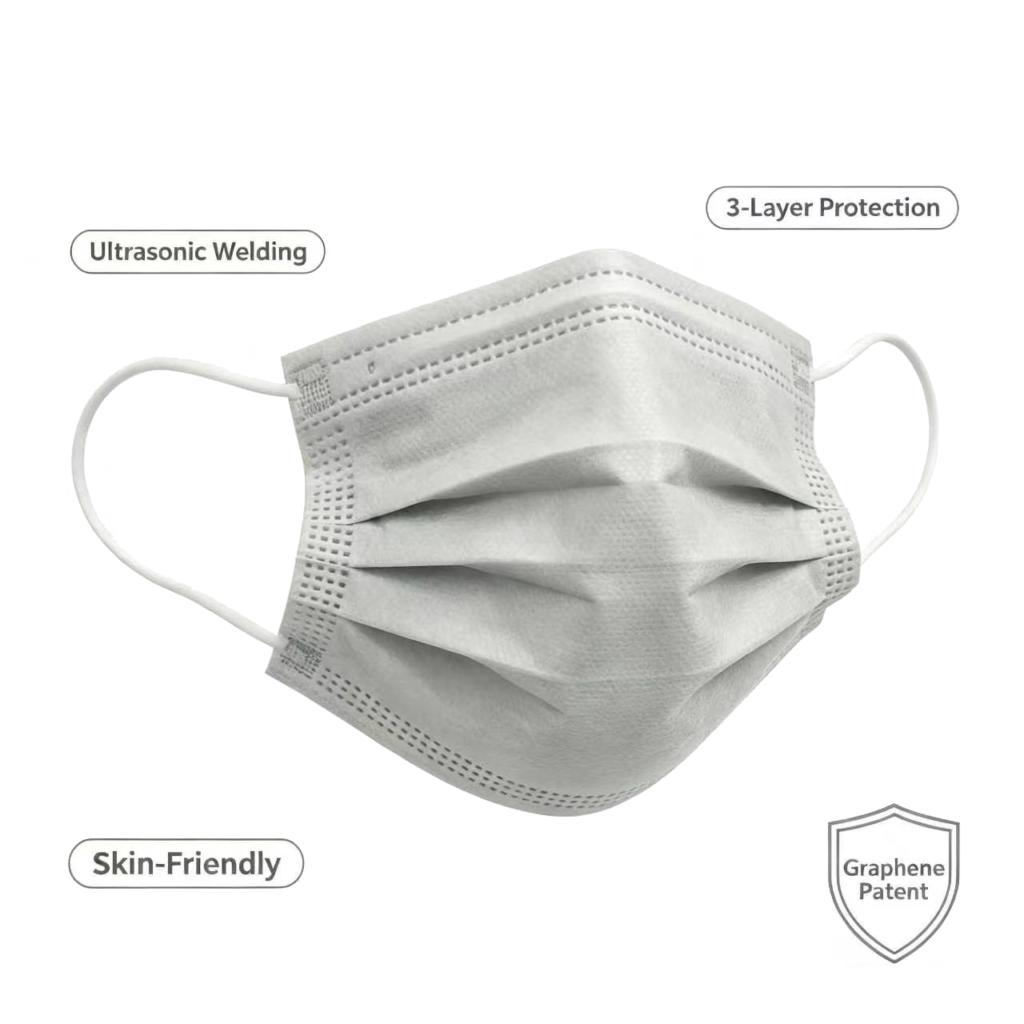
What Does N95 Not Protect Against?
This is another question buyers often overlook:
What does N95 not protect against?
An N95 is designed primarily for particulate hazards.
It does not provide protection against gases or vapors. CDC/NIOSH specifically states that filtering facepiece respirators such as N95s protect against particles but not gases or vapors.
This means an N95 should not automatically be recommended simply because a workplace is described as “high risk.”
The buyer needs to identify the actual hazard.
For example:
| Hazard | Typical consideration |
|---|---|
| Dust | N95/KN95-type respirator may be appropriate |
| Airborne particles | Respirator may be appropriate |
| Large droplets | Surgical mask may provide a useful barrier |
| Blood or fluid splash | Fluid-resistant medical mask may be required |
| Gas or chemical vapor | N95 alone is not sufficient |
| High-risk medical procedure | Product selection should follow the specific risk and local requirements |
This is also why surgical N95 products are different from ordinary N95 respirators. In healthcare environments where splash or fluid exposure is possible, additional performance characteristics may matter.
How Many Times Can We Use an N95 Mask?
This question sounds simple, but there is no universal number that applies to every N95.
How many times can we use a N95 mask?
The answer depends on the product manufacturer’s instructions, the working environment, contamination level, fit and the condition of the respirator.
CDC/NIOSH guidance says disposable filtering facepiece respirators can be reused in certain workplace programs if permitted, but they should be discarded when damaged, soiled or when breathing resistance noticeably increases. The manufacturer should be consulted for specific reuse instructions.
For healthcare situations involving limited reuse during shortages, CDC has previously recommended a more conservative approach. If no manufacturer guidance is available, data cited by NIOSH suggest limiting reuse to no more than five total donnings for the same healthcare worker in certain circumstances. This is not a universal “five-use rule” for every N95.
For normal procurement planning, therefore, buyers should not market a disposable N95 as a reusable mask unless the manufacturer specifically provides appropriate instructions and the destination market permits such use.
What Should You Compare When Buying Masks in Bulk?
Once the product category is clear, procurement becomes much easier.
For bulk surgical masks wholesale, price is important, but it should not be the first and only purchasing criterion.
There are at least five things worth checking.
1. Verify the Certificate
Ask the supplier for the actual certificate and supporting test documentation.
Do not rely only on a product listing saying:
CE Certified
FDA Approved
N95
Medical Grade
The certificate should correspond to the actual manufacturer, model, product type and applicable standard.
Shuer Medical states that it has medical device production licenses, product registration certificates, filing certificates and ISO 13485 medical device quality management system certification. Some products have obtained EU CE certification.
For European buyers, CE/MDR requirements should be checked according to the specific product classification and intended use rather than assuming that every mask carrying a CE mark follows exactly the same regulatory route.
2. Check the MOQ Before Comparing Unit Prices
A supplier offering a very low unit price may have a high MOQ.
For distributors, this can tie up working capital.
For hospitals or institutional buyers, the opposite can also happen: a supplier may accept a small trial order but struggle to maintain pricing and delivery once the volume increases.
Ask for:
- MOQ
- Trial order quantity
- Price tiers
- Packaging options
- Private-label requirements
- Carton quantity
- Shipping weight
- Production capacity
This gives you a much more realistic landed cost.
3. Ask About Production Lead Time
A mask is a relatively simple-looking product, but large orders still require production scheduling, raw materials, packaging and quality inspection.
Before placing a purchase order, ask:
How many days from artwork approval to shipment?
Also clarify whether the quoted lead time begins from:
- Deposit payment
- Purchase order confirmation
- Artwork approval
- Sample approval
- Raw-material preparation
This small detail can make a big difference to an importer’s delivery schedule.
4. Confirm the Exact Product Standard
Do not compare two masks simply because both are called “medical masks.”
For example, Shuer’s surgical mask is listed under YY 0469-2023, while its medical protective mask follows GB 19083-2023. Its N95/KN95 product is listed under GB 2626-2019. These standards correspond to different product categories and intended uses.
This is exactly why product classification should come before price comparison.
Why Factory Capability Matters for Bulk Orders
When an order reaches commercial scale, the question changes from:
“Can you make this mask?”
to:
“Can you keep making the same mask consistently?”
For distributors and importers, production stability can be more important than a small difference in unit price.
Shuer Medical is a Chengdu-based medical device manufacturer focused on medical and hygiene protective materials. Its product portfolio covers surgical masks, medical protective masks, graphene masks, disposable flat masks, N95/KN95 masks, FFP2 masks and customized printed masks.
The company also maintains an ISO 13485 medical device quality management system and holds medical device production and product registration-related qualifications, with some products carrying EU CE certification.
For larger B2B projects, Shuer Medical provides five production lines with a stated daily capacity of around 10 tons, with OEM/private-label support for customers that need customized packaging, branding or product specifications.
That makes the conversation different from simply buying finished masks from a trading company.
A distributor can discuss the entire project with the manufacturer:
product → specification → packaging → branding → production → inspection → shipment
rather than treating every part as a separate supplier problem.
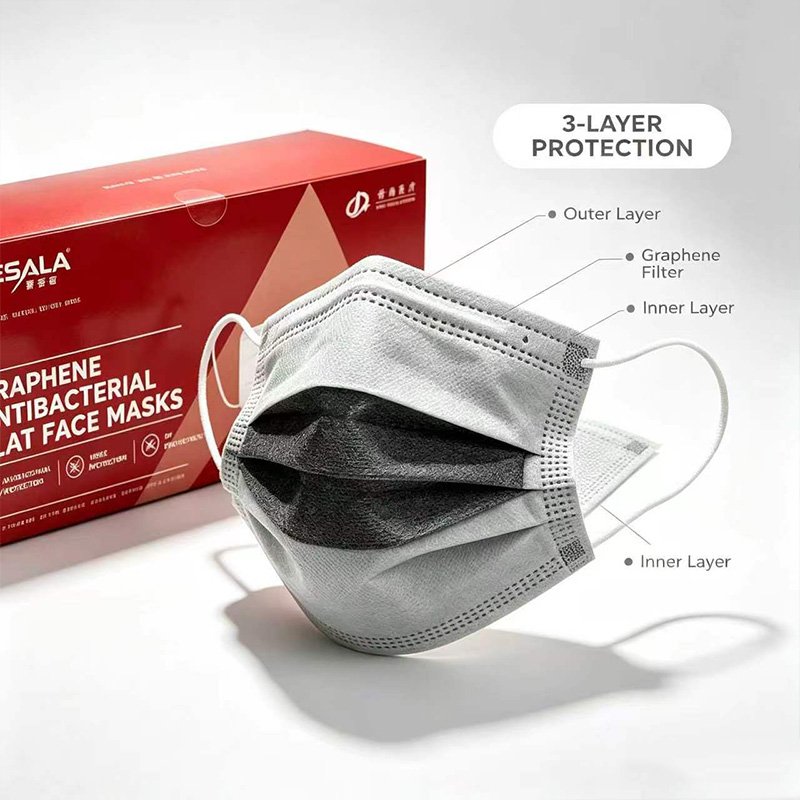
OEM Mask Manufacturing: What Can Be Customized?
Private-label buyers often need more than a different logo.
Depending on the project, OEM discussions may include:
- Mask color
- Mask shape
- Packaging
- Individual wrapping
- Inner box
- Carton design
- Brand logo
- Printed patterns
- Product specifications
- Private-label documentation
- Shipping carton requirements
Shuer’s product range already includes customized printed masks, with different patterns available according to customer requirements.
For a distributor launching a new mask brand, this can be more practical than importing a generic mask and trying to redesign the packaging after production.
Bulk Surgical Masks Wholesale: What Should You Ask the Factory?
If you are currently sourcing masks, here is a simple checklist to send to a supplier:
Product
- What type of mask is it?
- What standard does it follow?
- What is the filtration efficiency?
- Is it sterile or non-sterile?
- Is it intended for medical or civil use?
Certification
- Can you provide the certificate?
- Does the certificate match the manufacturer?
- Does the certificate cover the exact model?
- Is CE certification applicable to this product and market?
Production
- What is your MOQ?
- What is your monthly production capacity?
- What is the normal lead time?
- Can you support repeat orders?
OEM
- Can you print our logo?
- Can you customize the packaging?
- What is the MOQ for private label?
- Can you provide samples before mass production?
Shipping
- How many pieces per carton?
- What is the carton size?
- What is the gross weight?
- What is the estimated shipping time?
A supplier who can answer these questions clearly is usually much easier to work with than one who only sends a low unit price.
Final Thoughts: The Right Mask Depends on the Job
So, which mask should you buy?
If the application involves routine medical procedures and splash protection, a surgical mask may be the right starting point.
If the user needs respiratory protection against airborne particles, a properly certified respirator or medical protective mask may be more suitable.
If the product is intended for supermarkets, offices, schools or general consumers, a civil disposable mask may meet the requirement, depending on the destination market.
And if you are purchasing in large quantities, certification, consistency and supply capability deserve just as much attention as the price.
For international buyers looking for bulk surgical masks wholesale or planning medical protective mask procurement, the safest approach is to match the product to the intended use first, then verify the applicable standard, certification, MOQ, lead time and manufacturing capability.
That is also where working directly with an experienced manufacturer can make the procurement process simpler.
Looking for a mask manufacturer for your next bulk order?
Request a quote for mask bulk order and tell us your required mask type, quantity, destination market and OEM requirements.
Or view our mask product line to compare surgical masks, medical protective masks, N95/KN95, FFP2, disposable and customized mask options.
Sichuan Shuer Medical Devices Co., Ltd. — medical protective products developed with a focus on compliance, manufacturing capability and long-term B2B cooperation.